
We all know the punchlines about loud snoring—the elbow to the ribs in the middle of the night, the partner banished to the guest bedroom, or the jokes about sounding like a freight train. But if you or your partner are chronic snorers, it might be more than just a noisy nuisance. It could be a serious warning sign of a condition called Obstructive Sleep Apnea (OSA).
While your first instinct might be to visit a general physician, the solution to your sleep struggles might actually be found in a dentist’s chair. Here at Aesthetic Dentistry in Wasilla, AK, we want to help our patients understand the critical differences between simple snoring and sleep apnea, and how dental intervention can restore their restful nights.
Snoring vs. Sleep Apnea: Knowing the Difference
It is a common misconception that snoring and sleep apnea are the exact same thing. While they are closely related, there is a distinct medical difference between the two.
- Snoring occurs when the tissues in the back of your throat relax as you fall asleep. As you breathe in and out, the air squeezes through this narrowed airway, causing the relaxed tissues to vibrate. That vibration is the sound of snoring.
- Obstructive Sleep Apnea (OSA) happens when those relaxed tissues completely collapse, temporarily blocking your airway entirely. When this happens, your brain panics due to the lack of oxygen and briefly wakes you up to restart your breathing—often with a loud gasp or snort. This cycle can happen dozens or even hundreds of times an hour, completely destroying your sleep cycle.
Signs It Might Be Sleep Apnea
If you aren’t sure whether your snoring has crossed the line into OSA, watch out for these common symptoms:
- Waking up feeling exhausted, even after a full eight hours in bed.
- Frequent morning headaches or dry mouth.
- Loud gasping, choking, or pauses in breathing during sleep (usually reported by a partner).
- Difficulty concentrating, memory issues, or intense daytime sleepiness.
- Unexplained mood swings or irritability.
Untreated sleep apnea isn’t just about feeling tired; it takes a massive toll on your body. Over time, the constant drops in oxygen can lead to high blood pressure, an increased risk of heart disease, stroke, and weight gain.
The Surprising Role of Your Dentist in Sleep Health
You might be wondering: What does a dentist have to do with my breathing at night?
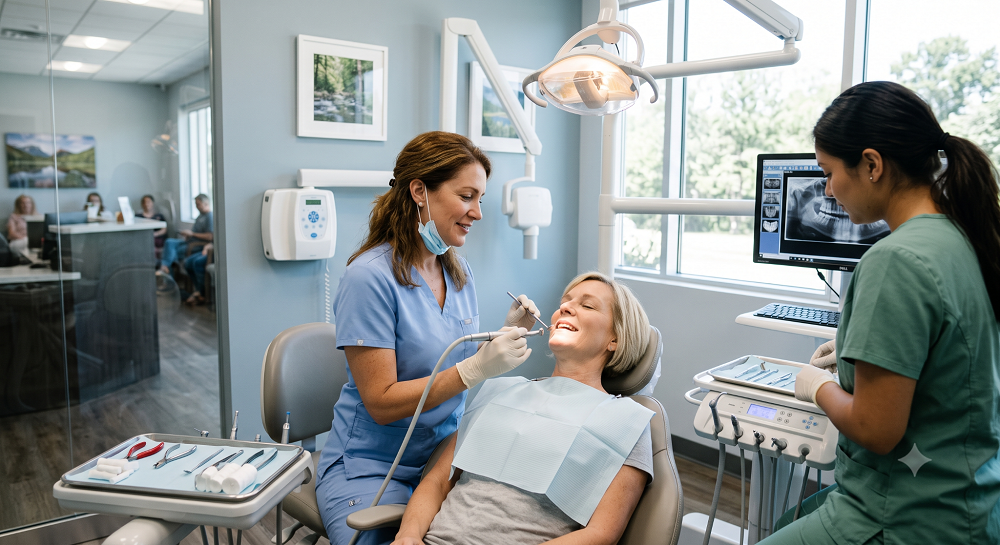
Because dentists are experts in the anatomy of the mouth, jaw, and throat, we are often the first healthcare professionals to spot the physical warning signs of sleep apnea. During a routine exam at a dentist office in Wasilla, we don’t just look for cavities. We also evaluate the soft tissues and structural makeup of your mouth.
Common dental signs of sleep apnea include:
- Bruxism (Teeth Grinding): When your airway is blocked, your body will instinctively push your lower jaw forward to open it up. This constant movement leads to severe nighttime teeth grinding, resulting in worn, flat, or chipped teeth.
- A Scalloped Tongue: If your airway is restricted, your tongue may press hard against the back of your teeth, leaving indentations or “scallops” along the edges.
- Redness in the Throat: The intense vibration of heavy snoring can cause chronic inflammation and redness in the throat.
- A Narrow Jaw or Large Tonsils: Certain anatomical features simply make you more prone to airway blockages.
If we spot these signs, we can work closely with a sleep physician to get you properly tested and diagnosed.
How We Can Treat It: Oral Appliance Therapy
When most people hear the words “sleep apnea,” they immediately picture a CPAP (Continuous Positive Airway Pressure) machine. While CPAP is highly effective and the gold standard for severe apnea, many patients find the mask uncomfortable, claustrophobic, or too noisy, leading them to abandon their treatment altogether.
If you suffer from mild to moderate sleep apnea, or if you simply cannot tolerate a CPAP machine, Aesthetic Dentistry offers a comfortable, effective alternative: Oral Appliance Therapy (OAT).
An oral appliance looks and feels much like a custom-made sports mouthguard or orthodontic retainer. You wear it only while you sleep. It works by gently shifting your lower jaw slightly forward and holding your tongue in place. This simple, painless adjustment prevents the soft tissues in the back of your throat from collapsing, keeping your airway wide open all night long.
The Benefits of an Oral Appliance
- Comfortable: Custom-fitted specifically to your teeth and jaw.
- Silent: No noisy machines keeping you or your partner awake.
- Portable: Easy to slip into a bag or pocket when traveling, without the hassle of hauling a machine through airport security.
- High Compliance: Because it’s so easy to wear, patients are much more likely to use it consistently every single night.
You deserve to wake up feeling refreshed, energized, and ready to take on the day in beautiful Alaska. By addressing the root cause of your sleep disruptions, you are not only saving your teeth from grinding damage but also protecting your long-term cardiovascular health.
Contact Us
Don’t let another restless night drain your energy and impact your health. If you are struggling with loud snoring, suspect you may have sleep apnea, or are looking for a CPAP alternative, we are here to help.
As a premier dental clinic in Wasilla, Aesthetic Dentistry is dedicated to providing comprehensive care that improves your overall quality of life.
Contact Aesthetic Dentistry today to schedule a sleep apnea screening and consultation.