
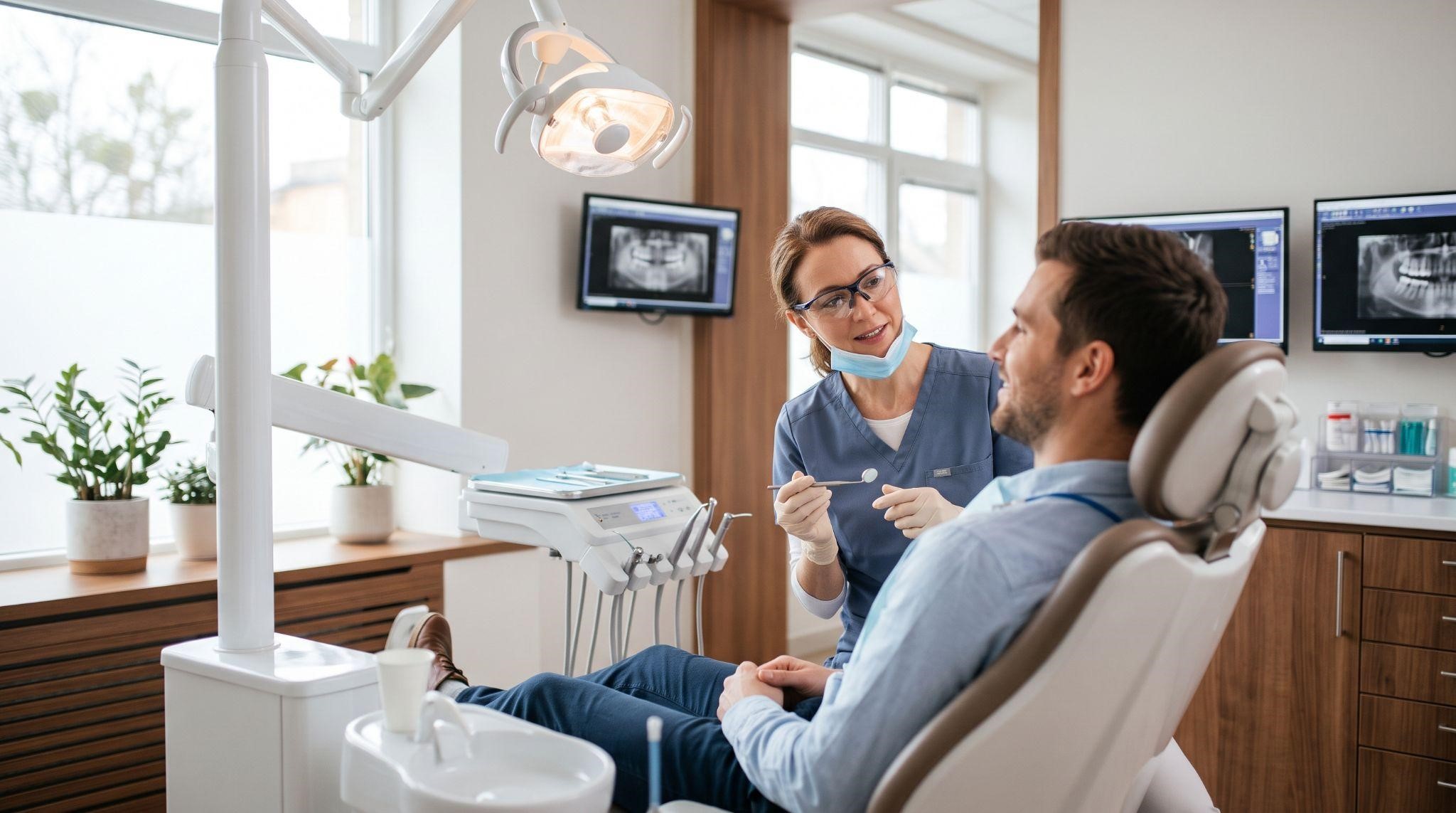
When you visit the dentist for a routine checkup, you probably expect a thorough cleaning, a quick check for cavities, and maybe a reminder to floss a little more often. However, one of the most vital parts of your preventive visit happens quietly in just a few minutes: an oral cancer screening.
While you brush and floss every day, it is nearly impossible to inspect every corner of your own mouth with the lighting, angles, and clinical training needed to spot early cellular changes. At Aesthetic Family Dentistry in Wasilla, AK, our team performs comprehensive screenings to catch subtle abnormalities long before they become serious health concerns.
Looking Beyond the Teeth: Areas Evaluated During a Screening
Oral cancer does not just affect one spot; it can develop across various soft tissues in and around the oral cavity. During an oral cancer screening, your dentist carefully examines areas that are difficult—or impossible—for you to see clearly in a bathroom mirror:
- Lips and Cheeks: Both the outer borders of your lips and the inner linings of your cheeks are checked for asymmetry, firmness, or discoloration.
- Tongue and Floor of the Mouth: The top, sides, and underside of your tongue, along with the delicate tissue beneath it, are high-priority zones where early changes frequently hide.
- Gums and Roof of the Mouth: Your dentist evaluates the gum tissue surrounding your teeth as well as the hard and soft palates at the roof of your mouth.
- Throat and Neck: Using gentle palpation along your jawline, neck, and lymph nodes, your dentist checks for hidden firmness or swelling, while also inspecting the visible back of your throat.
Subtle Signs a Dentist Looks For
Many people assume that a serious oral health issue will be obvious right away, but early-stage abnormalities are often remarkably subtle. A trained dental professional knows how to distinguish normal anatomical variations from warning signs that warrant closer monitoring or further testing.
During your exam, we look for:
- Persistent Sores: Small ulcers, canker-like spots, or irritations that fail to heal within two weeks.
- Unusual Patches: Flat or slightly raised white patches (leukoplakia), bright red patches (erythroplakia), or speckled red-and-white areas on the gums, tongue, or cheek lining.
- Lumps or Thickening: Small nodules, rough spots, crusts, or areas where the soft tissue feels unusually firm or thickened beneath the surface.
- Subtle Tissue Changes: Unexplained changes in how your teeth fit together, localized numbness, or minor tissue erosion that blends in with surrounding healthy tissue.
Why Early Changes Often Do Not Cause Pain
One of the biggest reasons patients delay having a suspicious spot evaluated is simple: it does not hurt. In their earliest stages, precancerous lesions and early oral cancers rarely trigger pain receptors. Unlike a toothache, a cracked molar, or an acute gum infection, abnormal cell growth can progress silently without causing soreness, throbbing, or sensitivity when you eat and drink.
Because there is no discomfort prompting you to call the dentist, it is easy to brush off a tiny white patch or a minor rough spot as a harmless pizza burn or an accidental cheek bite. Relying on pain as a warning system means potentially missing the window when treatment is simplest, least invasive, and most effective.
The Value of Routine Examinations
Consistency is your strongest defense when it comes to preventive oral healthcare. Scheduling regular dental checkups every six months allows your dentist to establish a baseline of what is normal for your mouth, making it much easier to notice even minor shifts over time.
Routine screenings are especially critical if any of the following apply to you:
- Persistent Symptoms: You have noticed a sore, lump, patch, or lingering hoarseness that has lasted longer than 14 days.
- Tobacco or Alcohol Use: Any history of smoking, chewing tobacco, vaping, or frequent alcohol consumption significantly increases risk.
- Sun Exposure: Living and working outdoors in Alaska exposes your lips to UV radiation year-round, including intense glare off snow and water.
- Age and Viral Factors: Adults over 40 and individuals exposed to the human papillomavirus (HPV) benefit greatly from consistent, proactive monitoring.
An oral cancer screening is quick, completely painless, and seamlessly integrated into your regular dental visit—giving you peace of mind that your entire smile is healthy beneath the surface.
Contact Aesthetic Family Dentistry in Wasilla, AK
Whether you are due for your six-month checkup or have noticed a spot in your mouth that has lingered for more than two weeks, our compassionate team is here to help. Protect your oral and overall health by scheduling a comprehensive exam today. Contact us today to learn more!